

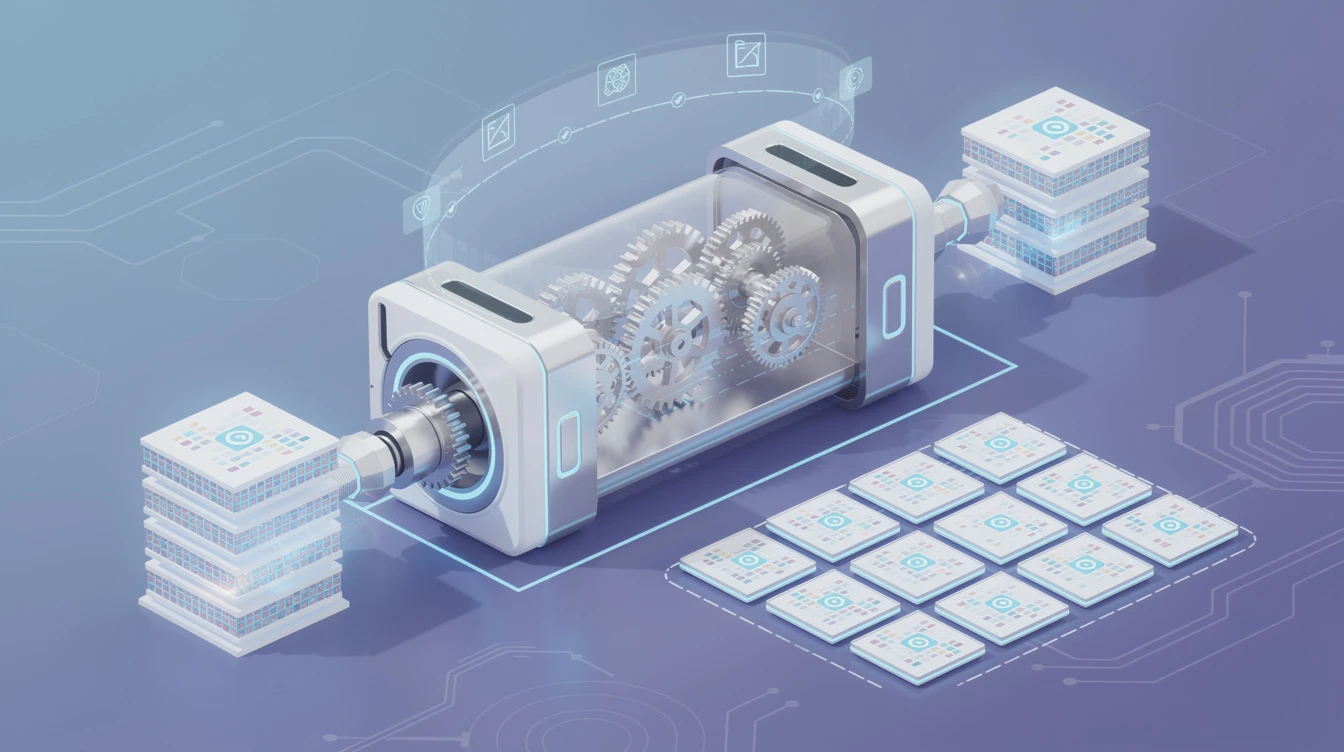
Deterministic Replay
Audit-mode reconstruction with drift classification
Replays past queries against historical corpus state to detect answer drift.
Read the full card →The substrate
Our database: a GPU-backed, append-only spine for knowledge and decisions. Every write is a signed receipt, every state is reconstructable to the instant, and the whole history replays deterministically. Not a vector store bolted onto a chatbot: the evidence layer the entire platform stands on.
How the substrate holds
CoreCrux never edits in place. Every state mutation appends once, ordered by a monotonic sequence, and segments are sealed with a BLAKE3 hash that commits to the seal before them. That one design decision is what everything above the substrate borrows its credibility from: a verifier can walk the seal chain offline and prove that nothing was inserted, reordered or quietly rewritten.
The spine is also why the platform scales down as well as up: an idle tenant's in-memory state hibernates to near-zero and rehydrates on demand, and the chain is indifferent to whether a tenant is resident. Storage tiering is an operational choice, never an integrity one.
segment #1041
seal b3:7c2f…
hibernated
segment #1042
seal b3:a90d…
warm · mmap
segment #1043
seal b3:e614…
warm · mmap
segment #1044 · open
appending: monotonic sequence
hot
Within a segment, records are covered by a sealed hash and ordered by monotonic sequence. Each seal commits to the hash and sequence of the seal before it, which is what makes a gap detectable rather than deniable. Cold segments hibernate to near-zero memory and rehydrate on demand; the chain does not care where a segment sleeps.
Most "AI databases" store embeddings and hope. CoreCrux stores the three things that make an answer defensible: the evidence, its provenance, and time. It is append-only (facts and decisions are events on a spine, never silently overwritten), so you can always ask not just "what does it know?" but "how did it come to know it, and when?"
Every write and every answer carries a signed CROWN receipt: a byte-stable, independently verifiable record of what happened. Nothing has to be taken on trust: a third party can re-check the receipt without access to your data.
Verify a live receipt yourself →CoreCrux can return a signed state snapshot: exactly what the system knew at a specific instant. Answer an auditor's "what did you know on the 3rd, and what did you act on it?" with a cryptographic snapshot, not a guess.
Answers come from several complementary lanes: lexical, dense-vector, sparse, graph and structural, fused into a single ranking over a compact on-disk index. This is the same real answer path the benchmark and IQ suites run: no shortcuts, no mock corpus.
The whole history replays deterministically, so an audit reproduces the exact bytes rather than a plausible re-run: the infrastructure layer beneath regulatory audit. And when something must be erased, erasure is tenant-scoped and runs in two steps: the tenant is first removed from serving, then its bytes are durably reclaimed by a tombstone-aware rebuild, with proof of the removal.
Audit-mode reconstruction with drift classification
Replays past queries against historical corpus state to detect answer drift.
Read the full card →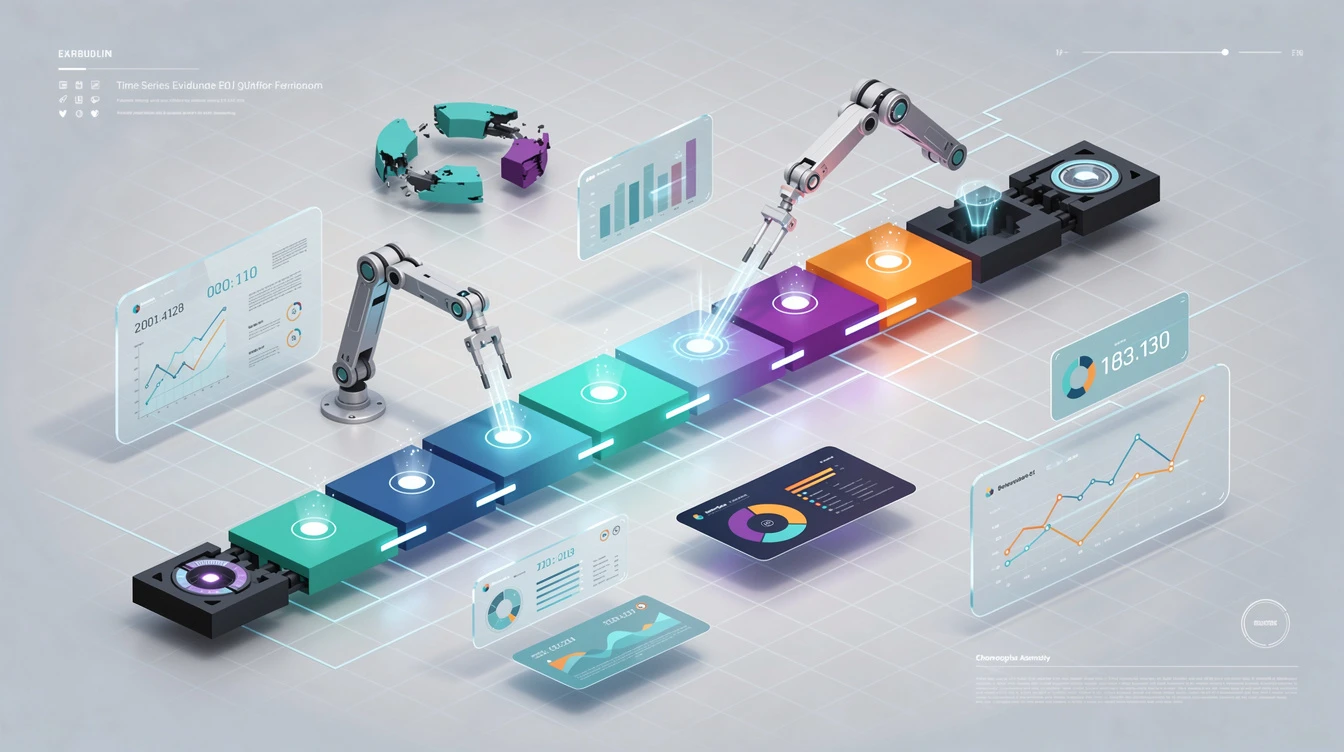
Time-travel debugging via receipt checkpoints
Reconstructs historical answer states at any point in time using receipt chains.
Read the full card →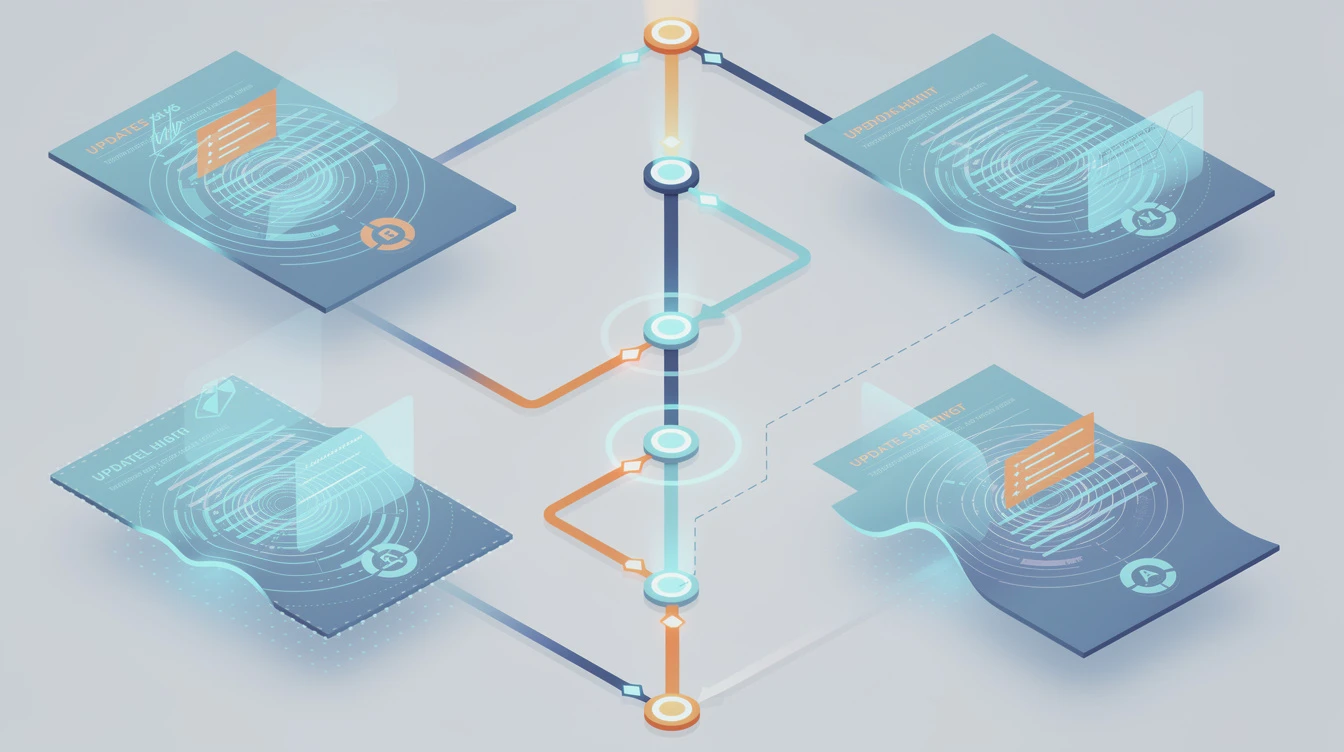
Mutable living state and dependency awareness for artefacts
Artefacts that track their own freshness, dependencies, and downstream impact.
Read the full card →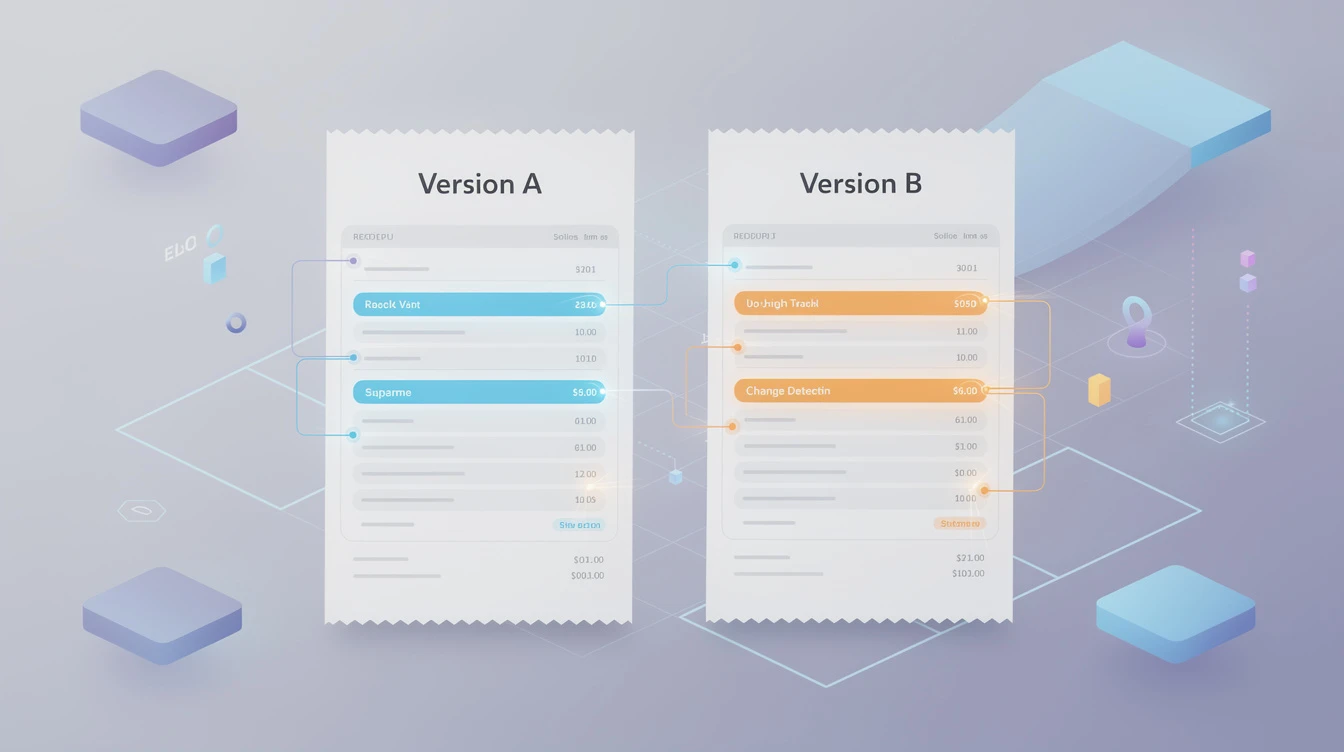
Compare answer versions across evidence changes
Visual comparison of receipt versions showing how answers evolved over time.
Read the full card →