

Coverage Labelling
Transparent thin/contested/low coverage indicators
Labels indicating when answers rest on thin, contested, or insufficient evidence.
Read the full card →The knowledge hub
A receipted knowledge hub for agents and teams: organisational knowledge that is versioned, auditable, and agent-ready, with every citation deref-able back to its source.
A read-plane over CoreCrux; per-tenant corpora; deref-able wx:// citations. [Fable: expand.]
Institutional knowledge agents can query. Every answer traceable. [Fable: expand.]
Transparent thin/contested/low coverage indicators
Labels indicating when answers rest on thin, contested, or insufficient evidence.
Read the full card →
Pathway from low-coverage to ingestion requests
Automatically identifies coverage gaps and generates targeted ingestion requests.
Read the full card →
Structured demand signal for corpus prioritization
Users vote on which sources should be prioritized for ingestion into the corpus.
Read the full card →
Eight quality techniques with corpus-class gating
Multi-stage quality pipeline applying eight techniques before content enters the corpus.
Read the full card →
ANN search flagging near-duplicates and derivatives
Detects near-duplicate content using approximate nearest neighbour search.
Read the full card →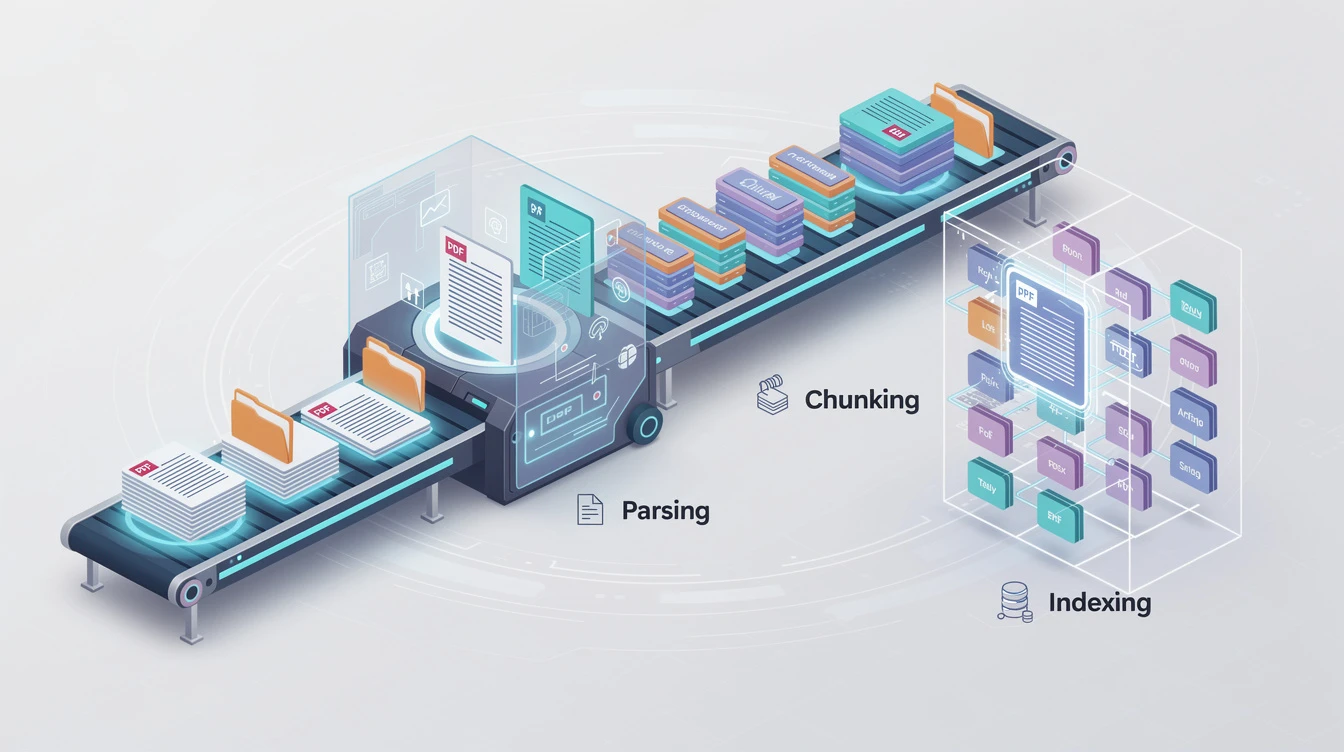
From raw file to searchable, receipted knowledge in minutes
CueCrux breaks documents into semantic chunks, generates embeddings, builds structural metadata, and creates cryptographic fingerprints for provenance.
Read the full card →
Yes, built-in OCR handles scans, photos, and faxes
CueCrux includes production-grade OCR that extracts text from scanned PDFs, photographed pages, and faxed documents with quality scoring.
Read the full card →
Yes, and CueCrux tells you exactly how much
CueCrux scores every source chunk for quality and surfaces confidence indicators so you know when an answer rests on low-quality evidence.
Read the full card →