

Core system
Engine
Orchestrator and reasoning runtime for receipted answers
Engine is the central reasoning operating system at the heart of the CueCrux platform, responsible for transforming user queries into fully receipted, evidence-backed answers. When a question arrives, Engine orchestrates a multi-stage retrieval and synthesis pipeline that begins with query understanding and ends with a cryptographically signed CROWN receipt proving exactly how the answer was constructed.
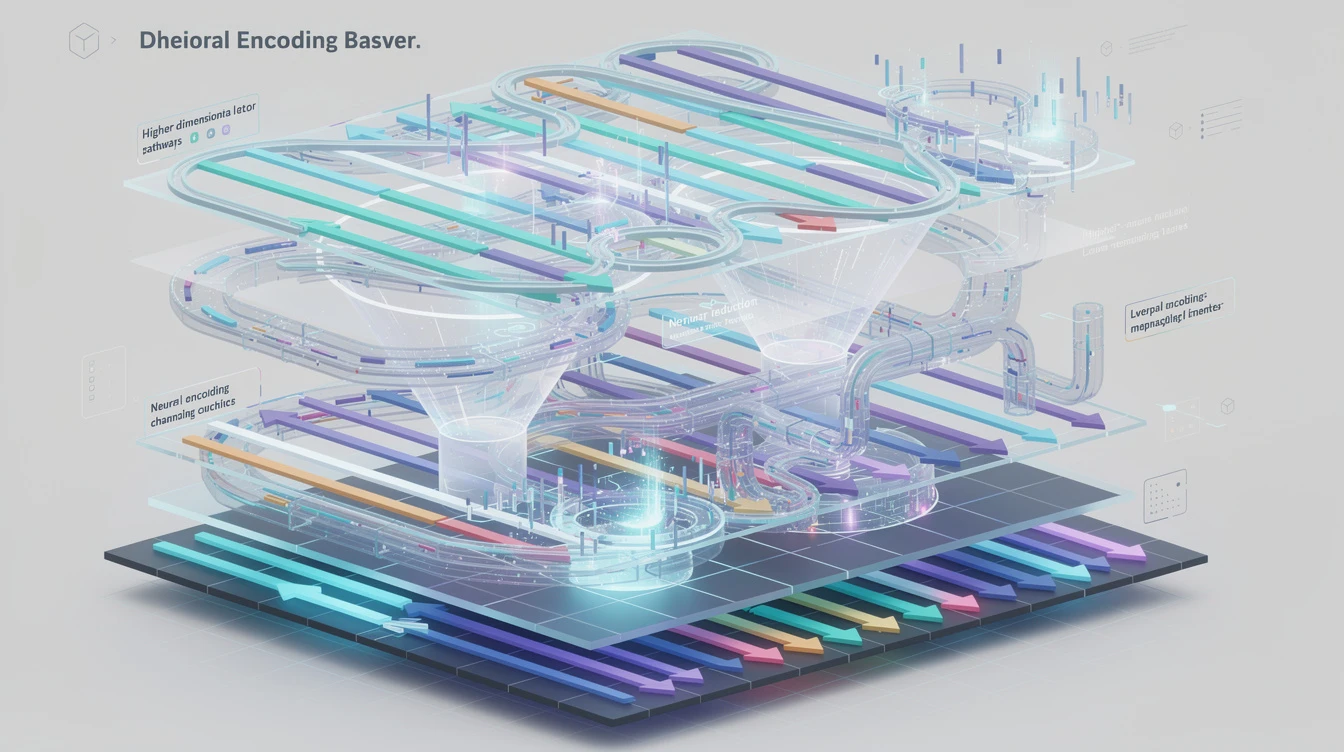
The retrieval layer uses a hybrid approach combining traditional sparse keyword matching through BM25 with dense vector similarity search. This dual-path strategy ensures robust recall regardless of whether the user phrases their question using the exact terminology found in source documents or expresses the same concept with entirely different vocabulary. The two ranked lists are merged through reciprocal rank fusion, and the fusion weights can be tuned per corpus class and query intent to optimise for different domains.
Once candidate evidence chunks are retrieved, Engine applies a sophisticated re-ranking stage that considers relevance, recency, source authority, and coverage diversity. The goal is not merely to find the single best passage but to assemble a balanced evidence set that represents the breadth of available knowledge on the topic. This evidence set feeds into the synthesis stage, where a language model generates a coherent answer while maintaining explicit links back to each supporting chunk.
Every step of this process is recorded in a CROWN receipt. The receipt captures the original query, the retrieved chunks with their ranking scores, the synthesis rationale, and a BLAKE3 content hash chain that enables anyone to independently verify the answer was produced from the claimed evidence. This level of transparency is what distinguishes CueCrux from conventional search and AI answer engines.
Engine also implements lane-aware indexing, meaning different portions of the corpus can be processed through different embedding tiers depending on their importance, domain specificity, and required recall performance. A medical research corpus might use a premium embedding lane while general web content uses a faster, more cost-effective lane. The lane metadata is recorded in every receipt so that retrieval conditions are fully reproducible.
Deterministic replay is another foundational capability. Because Engine logs every retrieval decision and evidence selection, an auditor can replay any past query against the historical corpus state and verify that the same inputs produce the same outputs. This is essential for regulated industries where answer provenance must withstand scrutiny.
For real-world users, Engine powers the Ask Surface where questions are posed conversationally, the Proof Surface where evidence chains are inspected, and the Watch Surface where ongoing changes to answers are monitored. It serves as the single source of truth for all answer generation across the platform, whether accessed through the web interface, the SDK, or the API gateway.
Engine integrates tightly with CoreCrux for event storage, VaultCrux for private knowledge access, and FactoryCrux for ingestion coordination. It is the component that ties the entire CueCrux ecosystem together, ensuring that every answer delivered to a user carries the evidence and transparency guarantees that define the platform.