

Explainer
How accurate are CueCrux answers?
As accurate as the sources, with confidence scores to guide you
Accuracy in CueCrux is a measurable, transparent property rather than a vague promise. The platform provides specific mechanisms for assessing how much you should trust each part of an answer.
The fundamental accuracy guarantee is source traceability. Every claim in a CueCrux answer traces back to a specific passage in a real source document. This means the answer is at least as accurate as its sources. If the sources are authoritative and current, the answer will be accurate. If a source contains an error, the answer will reflect that error, but you can identify the source and evaluate it for yourself. This is a fundamentally different accuracy model from systems that generate answers from opaque internal processes.
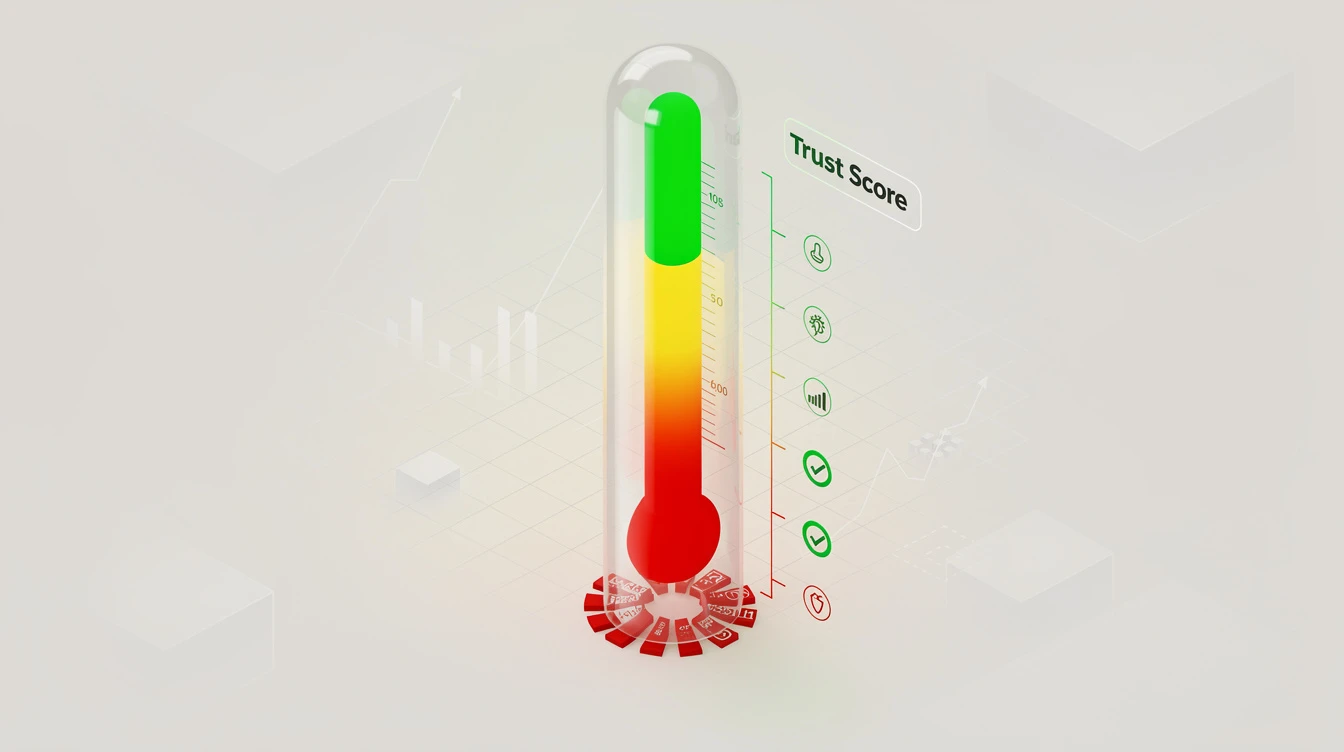
Confidence scoring provides granular accuracy signals. Each claim in an answer receives a confidence score based on multiple factors. Source authority considers whether the claim comes from a primary legal text, a peer-reviewed paper, a government publication, or a secondary commentary. Source agreement considers whether multiple independent sources support the same claim. Source recency considers when the source was last verified. Directness considers how directly the source addresses the specific question asked. These factors combine into a score that tells you how much weight to give each claim.
High confidence scores indicate claims that are well-supported by multiple authoritative, recent, directly relevant sources. You can rely on these claims with a high degree of comfort. Medium confidence scores indicate claims that are supported but may rely on fewer sources, older material, or indirect evidence. These claims are likely accurate but warrant a quick verification for high-stakes decisions. Low confidence scores indicate claims where the evidence is thin, potentially outdated, or indirect. These claims should be treated as starting points for further research rather than definitive answers.
The accuracy of the overall corpus is maintained through several mechanisms. Source ingestion includes quality assessment to ensure that only authoritative, identifiable sources enter the corpus. Freshness monitoring tracks when sources were last verified and flags potentially stale information. Community feedback through the Threads feature allows users to flag errors and suggest corrections, which flow back into the corpus as tracked amendments.
It is important to understand what CueCrux does not guarantee. It does not guarantee that every answer is correct in an absolute sense. No information system can make that promise. What it guarantees is that you can see the evidence behind every answer and make an informed judgment about its accuracy. This transparency-based accuracy model is more honest and more useful than systems that present answers with uniform confidence regardless of evidence quality.
CueCrux also does not guarantee completeness. The corpus, while extensive, does not contain every document ever published. If the answer to your question exists only in a source that is not in the corpus, CueCrux will not find it. The system mitigates this by being transparent about coverage. If very few sources are found for a query, the confidence scores will be low, signaling that the evidence base may be incomplete.
For practical purposes, CueCrux accuracy is best evaluated in comparison to the alternative approaches you would otherwise use. Compared to a manual research process, CueCrux is faster and more systematic, reducing the risk of missing relevant sources. Compared to a language model, CueCrux eliminates fabrication and provides verifiable citations. Compared to a traditional search engine, CueCrux provides synthesis and confidence assessment rather than leaving analysis to you. Each of these comparisons highlights different accuracy advantages.
The confidence scoring system empowers you to make better accuracy judgments than you could with any other tool. Instead of guessing whether an answer is reliable, you have specific, evidence-based indicators to guide your trust.