

Capability
Trust Gradient
Queryable confidence bands and fragility scores
The Trust Gradient provides continuous, queryable confidence scoring that reveals exactly how well-supported each claim in a CueCrux answer is. Rather than offering a single overall confidence number that hides important nuances, the Trust Gradient breaks down confidence at the individual claim level and provides multiple dimensions of trustworthiness that users can inspect and act upon.
Confidence scoring considers several factors for each claim. Source diversity measures how many independent sources support the claim, with higher scores for claims backed by multiple unrelated publishers. Source authority weights the credibility of each supporting source based on its domain reputation, publication history, and editorial standards. Evidence freshness assesses whether the supporting evidence is current or potentially outdated. Agreement strength measures the degree to which supporting sources converge on the same conclusion versus offering slightly different perspectives.
Fragility scores add a crucial dimension that confidence alone cannot capture. A claim might have high confidence based on current evidence but also high fragility, meaning that removing even one or two sources would significantly change the conclusion. Fragility is computed through a systematic process where the stress testing system evaluates what would happen if each piece of evidence were removed. The minimum evidence set required to sustain each claim is identified, and the fragility score reflects how close the current evidence set is to that minimum.
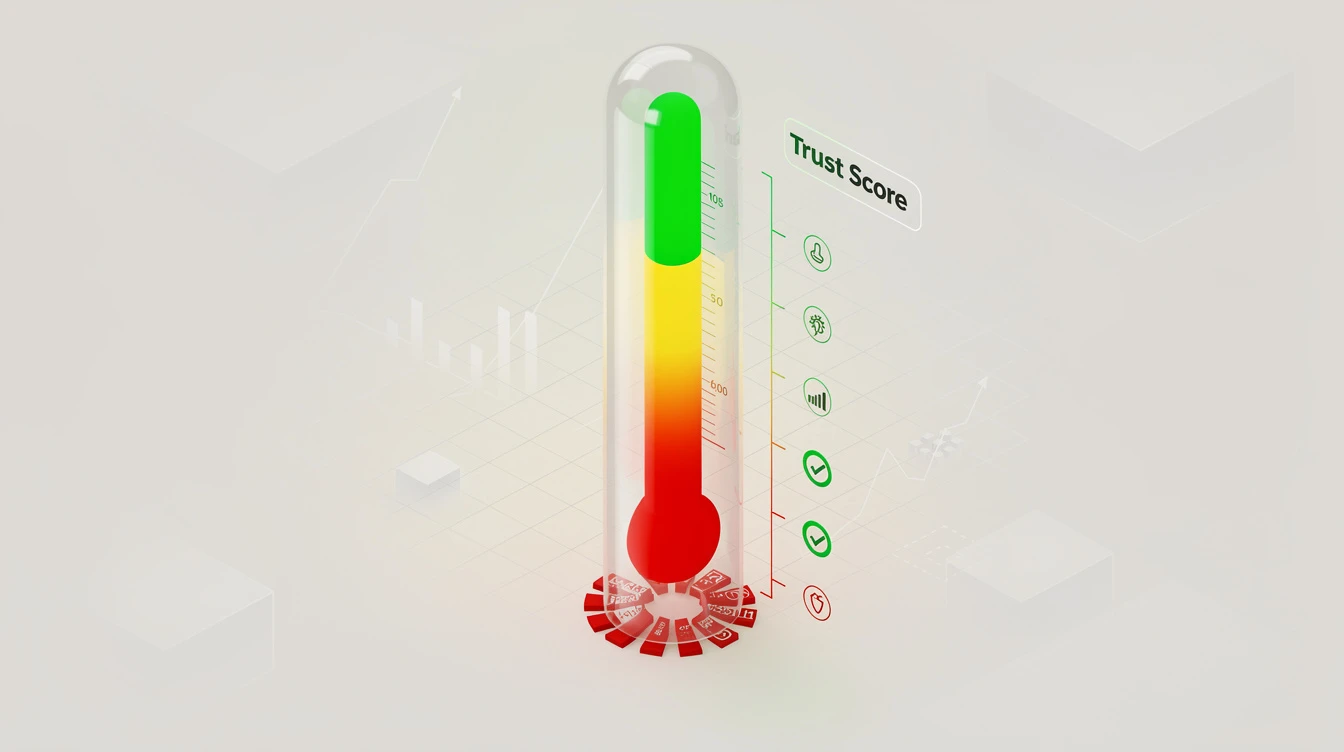
Confidence bands are the visual representation of these scores, surfaced prominently in the Proof Surface and more subtly in the Ask Surface. Each claim is displayed with a colour-coded band ranging from green for high-confidence, low-fragility claims through yellow for moderate confidence to red for thin or contested claims. Users can hover over any band to see the detailed breakdown of source diversity, authority, freshness, and fragility.
The Trust Gradient feeds into several other platform capabilities. Coverage Labelling uses the gradient to classify answers as solid, partial, or thin. The Watch Surface uses changes in the gradient to determine drift severity. Coverage-Driven Sourcing uses low-confidence areas to identify where additional ingestion would be most valuable. And the C3 Assurance Modes use the gradient to determine when an answer meets the quality threshold for its requested mode.
For users in regulated industries, the Trust Gradient provides the quantitative evidence quality assessment that compliance officers and auditors need. Rather than accepting or rejecting an answer in its entirety, they can evaluate each claim independently and make nuanced decisions about which parts of an answer to rely on in their professional work.
The Trust Gradient embodies CueCrux's philosophy that users deserve not just answers but honest assessments of how trustworthy those answers are. It turns transparency from a vague aspiration into a measurable, actionable feature.